
Used in
Widget, hosted help, tickets, and review
Team Access
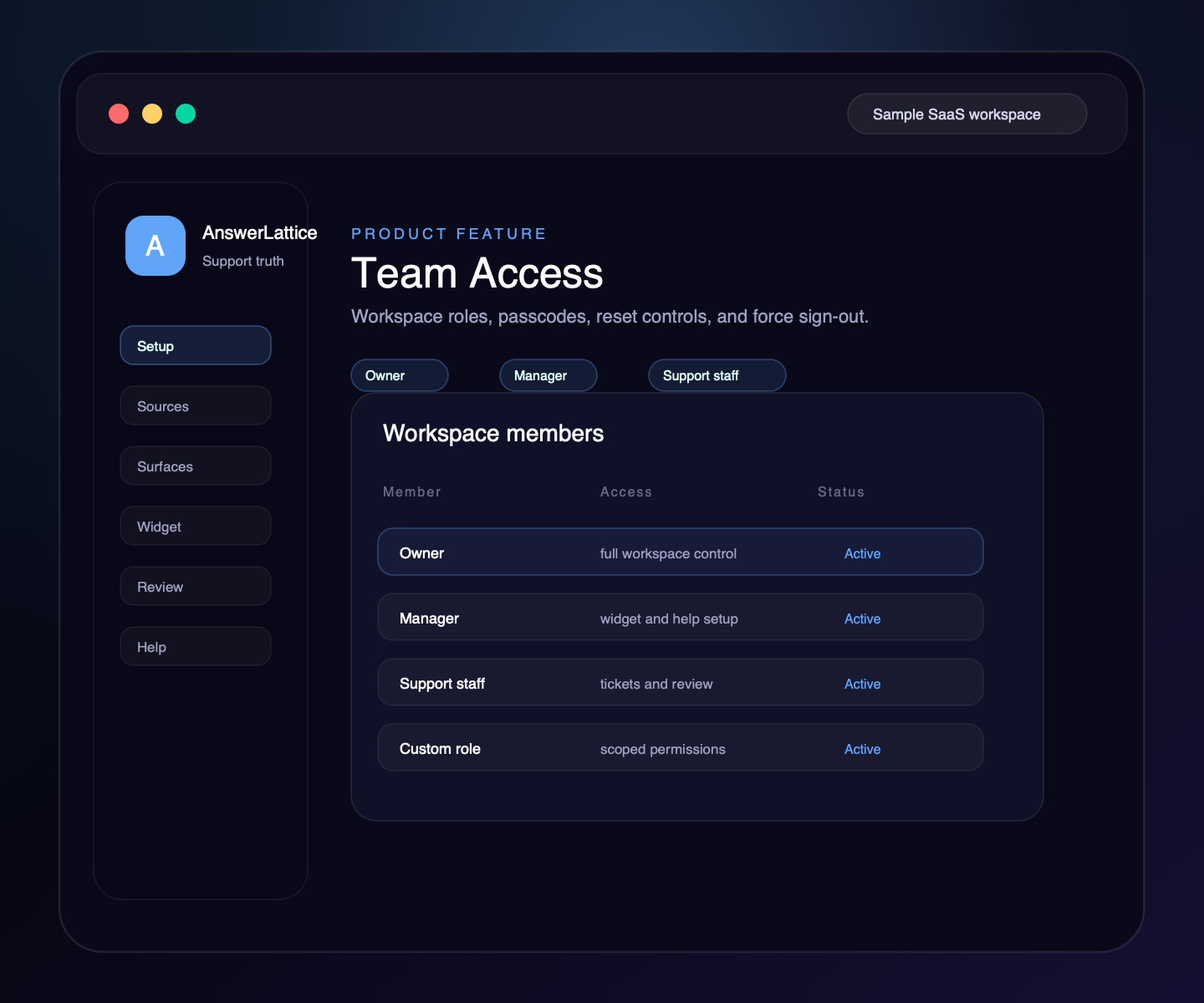
Invite workspace members, assign AnswerLattice-specific roles, reset login details, and force sign-out without exposing broad owner-level controls.
Widget, hosted help, tickets, and review
Drafts stay review work until approved
See what this feature changes in the support loop
Team Access
AnswerLattice now treats team management as part of the workspace control layer. Owners can add staff, assign role permissions, reset access, and keep support work role-scoped.
01 / Team Access
Add support leads, managers, or staff to the AnswerLattice workspace without giving every member owner-level access.
Use Owner, Manager, Support Staff, or custom AnswerLattice roles so billing, team, knowledge, widget, answer review, and support controls stay scoped.
Members can be added with an email setup path or an owner-managed staff ID and temporary passcode.
Owners can create a new temporary passcode, share it once, revoke refresh access, and keep the member record intact.
Sensitive access changes can revoke refresh access so new Firebase tokens require current permission state.
AnswerLattice roles use AnswerLattice permission claims and routes, so billing, widget, knowledge, support, and answer-review access can be controlled separately.
Workflow
Team Access gives AnswerLattice workspaces an owner-managed member lifecycle for support, answer review, billing, widget, and knowledge access.
The owner uses the AnswerLattice workspace team page.
Enter name, optional email, phone metadata, and the starting role.
Email users set their password; passcode users receive a one-time staff ID and temporary passcode.
Change roles or custom permission sets as the workspace team grows.
Create a new temporary passcode or force sign-out when access needs to be refreshed.
Connected support outputs
Roles and reset controls matter because the same workspace contains billing, widget setup, support content, answer review, tickets, and release-aware knowledge.
Team Access turns structured support knowledge, safe page context, and owner approval into usable support output.
Docs, tickets, releases, screenshots, recordings, and notes become widget help, hosted help, fallback, and answer review from one workspace.
Workspace members and roles
Owners can add the people who will help configure product details, pages, and starter knowledge.
Staff can be limited to support content work without receiving billing or role-management controls.
Widget configuration can stay with trusted managers instead of every support user.
Answer review and role assignment remain controlled so drafts do not become official without the right access.
Support output layer
A founder may start with team access, but the value comes from turning it into setup, in-app support, hosted help, fallback, and approved-answer review.
Each feature is explained as something buyers already recognize: docs, FAQs, releases, tickets, feedback, notifications, or review work.
The feature does not live alone. It helps turn scattered product knowledge, tickets, and signals into widget answers, hosted help, fallback, and owner review.
Drafts, generated content, ticket gaps, and feedback remain reviewable before anything becomes official support.
Create your workspace, add team access, turn starter sources into reviewed support drafts, and map the pages where users need help.
Install one widget, pass safe page hints, accept explicit screenshot context, allow exact app origins, and answer users inside your app.
Turn scattered product knowledge into scannable docs, FAQs, owner answers, release notes, widget help, fallback tickets, feedback, and a focused read-only owner brief.
See missing, stale, or release-affected support, review proposed changes, and approve what becomes official.
Worth checking
Answer the evaluation questions before setup: how it launches, what stays safe, and how it differs from nearby support tools.
Show how the feature fits into the widget, hosted help, fallback, and owner review before users depend on it.
View product mapReview safe page context, blocked private data, owner roles, fallback behavior, and approved-answer review.
Review securitySee where AnswerLattice fits against chatbots, helpdesks, and static knowledge bases without treating them as the same product.
Compare optionsQuestions
No. The roles and permissions are AnswerLattice-specific and apply only to the AnswerLattice workspace.
Yes. Owners can create a new temporary passcode and revoke refresh access. Email-backed members receive setup email when first created.
Team members use the AnswerLattice dashboard and team page with the permissions assigned to their workspace role.
AnswerLattice works best when team access feeds widget answers, hosted help, tickets, and answer review from the same reviewed support knowledge.